The Amoy Mission Pages About Frank EckersonMissionary to the Chinese in Fukien Province. Written July 13, 2009 by
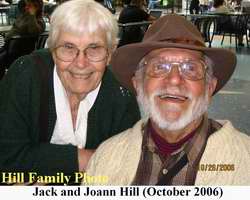
Jack W. Hill, former missionary to
Amoy , 1947-1950.
 [Dr. Bill's note: many thanks to Dr. Jack for writing this about Frank Eckerson, who was quite the character (I've a NY Times article reporting him being shot by Chinese bandits; he still got around even after that!] Those of you who have other stories or anecdotes about folks in the Amoy Mission--please send them! My e-mail: Amoybill@gmail.com
 We knew Frank Eckerson most of the time we were in
Tong-An between the fall of 1947 and some time in the spring of 1950.
He welcomed us to
Tong-an and, a few days after we arrived, he took me into the town of
Tong’an introducing me to some Christian friends and merchants. Especially memorable –during one visit I was served two precious raw eggs in a bowl of hot sugar water which I dutifully downed. Not that I missed it, it was a delicacy that I never encountered again either in China or in the Philippines, where we also worked with the Chinese community.
Mr. Eckerson lived in a small old building within the compound of the church in the tiny village of Siang-tsun-thau about a quarter mile from our mission compound. The town of
Tong-an was about a mile further east of our compound. Occasionally, I saw him professionally when the man working for him would come to summon me because Dr. Eckerson had passed out. I would quickly go to see him as he lay on a thin mattress on a shelf about three feet wide a good 30 inches above the floor level against one wall of the room.
He would indeed be unconscious for about 10 minutes. As he regained consciousness he would look at me speaking in Chinese, unaware then that I couldn’t understand what he was saying. As he became more aware he would switch to English. His pulse rate was very slow, which was the problem. He had Adam-Stokes syndrome and during those periods enough blood couldn’t get to his brain. I couldn’t do much for him and finally was able to convince the Communist Police Chief of
Tong-an that he should be moved to the larger hospital [
Hope Hospital] in
Kulangsu which had more diagnostic equipment and medicine.
He died there a few months later.
He certainly was “his own person” in some ways. He never responded to our invitations to our mission station gatherings. But he would communicate often by sending his man “Friday” with a note. Always these notes were written in long-hand with very flowery notations and inventive abbreviations ( 4 = for). This took skill because the words were squeezed between holes that had been made by numerous bookworms which, over time, feasted on his paper supply.
When he walked, as he rarely did by the time I knew him, he did so by lifting his left foot higher than the right. He had a spring device to lift his left shoe because the bandit’s bullet, when he was shot years earlier, had passed through his left leg near the knee severing a nerve and leaving him with a foot-drop deformity.
He was an exceptionally gifted speaker so that, when on furlough, funds for his work were easily raised. At one point he secured a rather large printing press. He had it stored at his home, but I never saw it in operation –it may still have been in crates. He annoyed the rest of the Mission group because he got this equipment for his projects alone. The other missionaries followed the policy, determined together during the previous mission meetings, where the funds collected for the mission work were to go.
He was in his mid-70’s when we knew him. He had insisted on retiring and remaining on the field instead of living in the U.S. as the other missionaries did. He was there all during WWII and later. During the war the Japanese had seized the Fukien Province’s port cities and islands of
Amoy and
Kulangsu, but did not get on the mainland.
During the lean years of the war he had tried to get the local people to eat brown rice in order to avoid the vitamin deficiencies of polished rice. He failed in that attempt. Unpolished rice took too long to cook and used too much fuel. So he then bought nutritious shark livers for their oil which he distributed to the people --replacing cod- liver oil.
By the time we arrived in
Tong-an and the small local village of Siang-tsun-thau in 1947,we didn’t see much of him. He no longer attended the local church services. Presumably he was able to listen from his dwelling nearby. Aside from taking me on that initial visit when I arrived and seeing him professionally when he had these attacks, our personal contacts were limited. We occasionally sent him some dishes that Joann cooked. For which his notes came back expressing his profuse gratitude. Joann, as a small child growing up in nearby
ChangChow and based on his infrequent visits, remembers Frank Eckerson as a warm kind man with a very bad limp.
He was much-loved and respected by the Chinese people.
July 13, 2009
Jack W. Hill, M.D., Missionary
Reformed Church in America